

It is common for rescue cats to stop using the litter box after being adopted.
If your rescue cat isn't using the litter box, how long should you wait before seeking help? This article provides a detailed explanation of the causes and solutions for rescue cats not using the litter box.
Reasons why rescue cats don't use the litter box
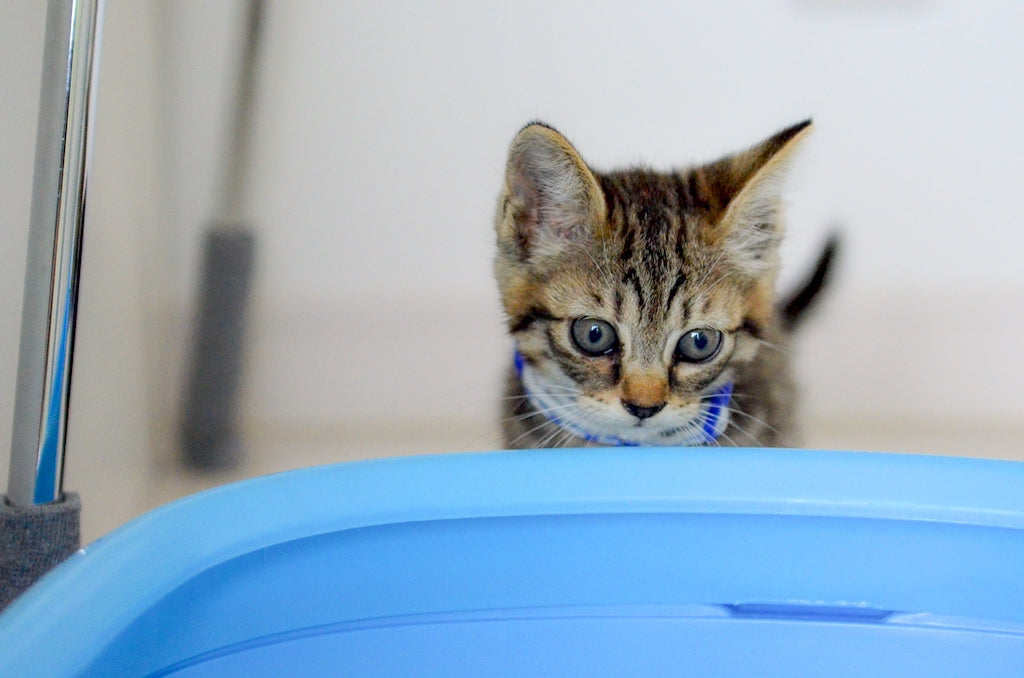
It's common for rescue cats to stop using the litter box right after arriving home. There are three possible reasons why they might not use it. Let's explore these reasons.
High stress levels
Rescue cats often experience high stress levels immediately after coming to a new home.
Cats, by nature, are vulnerable during defecation and urination, so they tend to finish quickly and leave the spot. Cats experiencing high stress tend to hold their urges to avoid being vulnerable.
Dislikes the litter box
Cats' ancestors lived in deserts, so they instinctively relieve themselves in sandy areas. There are various types and materials of cat litter, and preferences vary among cats.
Also, the litter box needs to be spacious enough. If it doesn't suit the cat's preferences, they may hold their urges.
Cystitis or constipation
When cats are under significant stress, they can develop feline idiopathic cystitis, for which stress is a contributing factor. The pain during urination caused by cystitis can make them hold their urges. Additionally, if cystitis causes bloody urine, the urethra can become blocked by blood, making urination impossible.
When under high stress, cats may not consume enough food or water. This can reduce the water content in their feces, leading to constipation and difficulty defecating.
How to deal with a cat not using the litter box
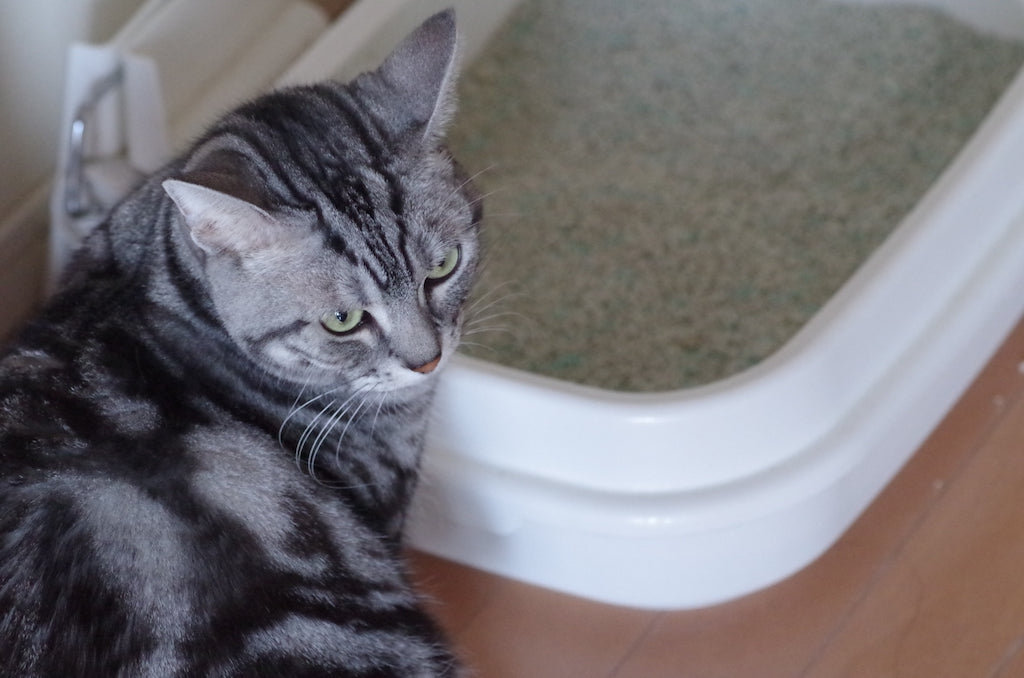
How to deal with a cat not using the litter box varies depending on the cause, but first, it's essential to adjust the rescue cat's living environment. Let's explain each solution.
When the cat is highly stressed
Rescue cats will be under a lot of stress for a while after you bring them home. For the first two weeks after bringing them home, let them spend time in a cage to gradually get used to their new surroundings. Choose a quiet place for the cage. Also, since they are overly sensitive to stimuli like sounds, covering the cage with a towel can help them calm down.
Even after they can come out of the cage, place the litter box in an area where people don't often approach.
From a veterinary perspective, the ideal number of litter boxes is considered to be the number of cats plus one or more. It's a good idea to place one in a commonly used living area and also in a hallway or a room that isn't frequently entered. Using covered litter boxes might also be beneficial.
When the cat dislikes the litter box
Are you familiar with the problem of stray cats using sandboxes in parks as litter boxes?
Cats' ancestors lived in deserts, so they instinctively want to use sandboxes as their toilets. You can easily understand cats' preferred litter if you imagine the sand in a park sandbox. They tend to prefer smaller, fine-grained litter.
Also, cats cover their waste with sand after using the litter box to hide the smell. Therefore, it is known that litter with strong deodorizing effects is preferred.
Types of cat litter include mineral, paper, wood, tofu, and silica gel. Each type varies in particle size, clumping ability, and deodorizing effect. If your rescue cat isn't using the litter box, we recommend trying several types of litter. Observe which litter box they prefer by using different types of litter in each. However, as a veterinarian, I don't highly recommend tofu litter as cats often try to eat it.
Regarding the depth of the litter, a depth of at least 5 centimeters from the bottom is desirable. If it's less than 5 centimeters, the cat may not be able to cover its waste completely and tends to avoid using it.
The size of the litter box is also one of the factors that make a cat like it. The ideal size for a cat's litter box is said to be 1.5 times or more its body length. This means the cat can turn around inside the litter box without sticking out.
Have you seen videos of cats using the litter box where their upper body is outside the box or they have their paws on the edge of the box? These are often treated as humorous videos, but they are actually the cat's way of indicating that the litter box is not the right size. It is necessary to provide a litter box of adequate size.
Regarding hooded litter boxes, I mentioned earlier that they are good for stressed cats. However, hooded litter boxes also tend to be avoided because odors can accumulate inside. Instead of making all litter boxes hooded, you might consider having one of the provided litter boxes be hooded.
Also, cats don't like to relieve themselves in dirty litter boxes. It's important to clean the litter box daily.
When the cat has cystitis or constipation
When a cat has cystitis or constipation, they may take a squatting position in the litter box but nothing comes out. Frequent trips to the litter box, crying out while squatting, or exhibiting the same behavior outside the litter box are also indicators.
If you observe such behavior, immediately take your cat to the vet. It can be life-threatening. Do not self-diagnose.
For cystitis and constipation, in addition to managing the litter box environment, you may need to switch to a therapeutic diet and always provide fresh water. Oral medication may also be necessary, so always follow your veterinarian's instructions.
How long should you wait? When should you visit the vet?
If your rescue cat isn't using the litter box, it can be difficult to know how long to wait. A good guideline for judgment is to check for the presence or absence of symptoms.
If there are symptoms of cystitis or constipation, go to the vet immediately.
If there are no symptoms, but the cat hasn't used the litter box for more than a day after the litter box environment has been adjusted, a visit to the vet is necessary.
If you are unsure, consult your veterinarian.
Summary
If your rescue cat isn't using the litter box, the first step is to reassess the litter box environment. In most cases, improving the litter box environment will resolve the issue.
However, sometimes the inability to use the litter box can be due to an illness, so don't wait; consult your veterinarian as soon as possible.
Related Articles

|
【Related Articles】 |


![[Written by a Veterinarian] Is Buying a Cat from a Pet Store a Good Idea? Pros, Cons, and Checkpoints for Identifying a Healthy Kitten](http://www.poponeko.jp/cdn/shop/articles/petshop_cat.jpg?height=400&v=1778304000)
![[Written by a Veterinarian] Before You Worry About Your Rescue Cat Not Warming Up to You: How to Build a Bond with a Skittish Cat and Train Them to Be More Sociable](http://www.poponeko.jp/cdn/shop/articles/shutterstock_2626846741_c3619e26-699b-4722-a0b0-0c99f5414d1b.jpg?height=400&v=1778305548)
![[Written by a Veterinarian] How to Prepare for a Successful Foster Cat "Trial Period": Environment and 2-Week Schedule](http://www.poponeko.jp/cdn/shop/articles/2_a624e34a-ac59-4dfe-88cb-6a373ea44e7d.jpg?height=400&v=1778305479)
![[Written by a Veterinarian] How to tell the age of a rescue cat: Identifying "estimated age" from teeth and eyes and care by age group](http://www.poponeko.jp/cdn/shop/articles/pixta_121706085_L_547a4397-8d02-4a59-804f-238d8151b72e.jpg?height=400&v=1783812906)
![[Slightly Imperfect] Cat-Friendly Skin Protection Suit (Coverall) for Cats](http://www.poponeko.jp/cdn/shop/files/DSC05845.jpg?v=1769403729&width=600 "[Slightly Imperfect] Cat-Friendly Skin Protection Suit (Coverall) for Cats")
![[Set Item] Leaf Ribbon & Cat Collar - Petit Fleur - Purple](http://www.poponeko.jp/cdn/shop/files/2608_00408.jpg?v=1789946167&width=600 "[Set Item] Leaf Ribbon & Cat Collar - Petit Fleur - Purple")

![[Set product] Leaf ribbon & cat collar, gingham check, mint green](http://www.poponeko.jp/cdn/shop/files/DSC00110_5e9f619b-1b6f-4cfa-9add-f4ea49a52821.jpg?v=1780663890&width=600 "[Set product] Leaf ribbon & cat collar, gingham check, mint green")
![[Set] Leaf Ribbon & Scrunchie Cat Collar, Petit Fleur, Pastel Pink [Limited Color]](http://www.poponeko.jp/cdn/shop/files/2608_00420.jpg?v=1789946167&width=600 "[Set] Leaf Ribbon & Scrunchie Cat Collar, Petit Fleur, Pastel Pink [Limited Color]")
Leave a comment