

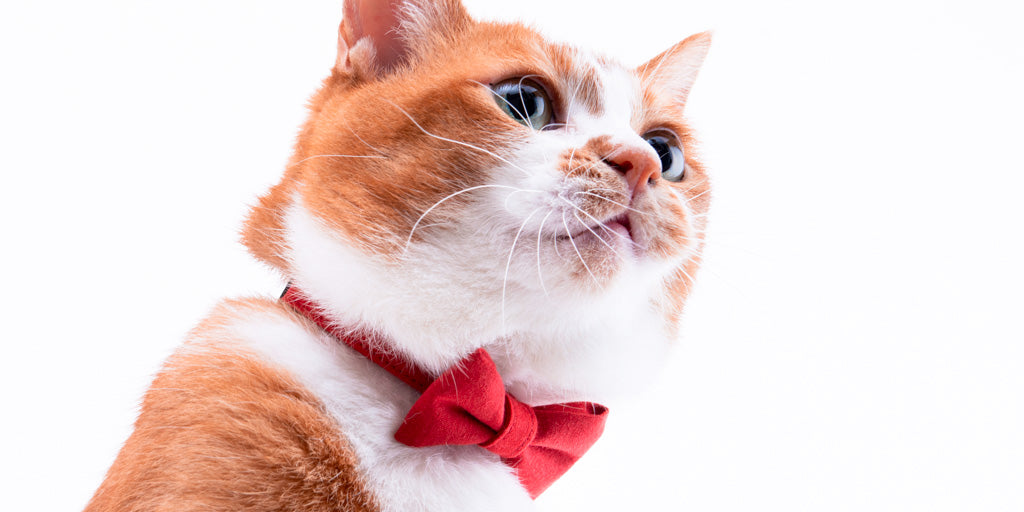
A cat wearing a collar is so cute!
For cats, a collar is not just a "fashion item"; it also serves to identify them as a pet cat in case they ever escape. While cat collars are so important, some cats can develop hair loss due to their collars.
It makes you feel a little guilty, doesn't it? For owners who worry, "I don't want my cat to get collar alopecia" or "What should I do if my cat gets collar alopecia?", we will explain the causes and countermeasures for collar alopecia.
What is Feline Collar Alopecia?

"Collar alopecia" is when the fur around your cat's neck falls out. It refers to hair loss in the area where the collar is worn.
In addition to hair loss, the bald area can also become inflamed, causing pain or itchiness.
Furthermore, once collar alopecia develops, it can be difficult to cure. If the cause of collar alopecia is not identified, the symptoms may recur.
Causes of Hair Loss from Cat Collars

Why do cats develop collar alopecia?
It's heartbreaking to think that wearing a collar for their safety could cause them distress.
There are several possible causes for collar alopecia in cats (various theories exist).
- Collar is too tight
- Collar is too heavy
- Skin problems due to bacteria
- Allergy to collar material
Some of these can be easily remedied. Let's look at each in detail.
Collar is too tight
If the collar is too tight, constant friction occurs around the cat's neck. This friction causes the fur to fall out. It can damage not only the cat's fur but also the hair follicles, making it difficult for the hair to regrow.
Also, the skin around the neck can become inflamed, leading to itchiness and scratching, so it's important to be careful.
Collar is too heavy
Hard and heavy collars place a significant burden on a cat's neck. This can cause the cat to pull out or scratch its fur due to stress, leading to collar alopecia.
Be careful with collars made of nylon or leather, or those with large bells or metal ID tags, as these can be heavy.
Skin problems due to bacteria
Cat collars are worn constantly. As a result, dirt such as dander, sebum, and dust can accumulate, making them unhygienic. Bacteria can then multiply, leading to skin problems and collar alopecia.
Allergy to collar material
If a cat is allergic to the collar material, the area where the collar is worn can become inflamed and bald. Leather, nylon, metal, and rubber are particularly prone to causing allergies. Cat collars with a lot of decorative elements like frills and lace are also not suitable for daily use.
Furthermore, the chemicals or herbal ingredients in flea collars can cause allergic skin problems and lead to hair loss if they don't agree with the cat.
How to prevent collar alopecia? How to deal with collar alopecia?

By understanding the causes of collar alopecia and taking appropriate action, you can protect your beloved cat from it!
Measures to prevent collar alopecia in cats
If the fur around your cat's neck, where the collar is worn, becomes shorter or thinner than other areas, it may be an early sign of collar alopecia. Take immediate action to prevent collar alopecia.
● Adjust the collar size
For cats that have gained weight or are in their growth phase, collars can become too tight. Regularly check if the collar size is appropriate and adjust it as needed.
For kittens and short-haired cats, a good fit allows one to two fingers to slide between the collar and the neck. For long-haired cats, allow for a margin of two to three fingers.
● Keep the collar clean
If bacteria proliferate on a cat's collar, it can emit an unpleasant, pungent odor. Regularly wash the cat's collar with water to keep it clean. Ideally, you should replace the cat collar with a new one every six months.
By the way, fabric deodorizer sprays and disinfectant sprays are not recommended as they may contain fragrances.
● Brush long-haired cats regularly
Long-haired cats are prone to fur breakage due to collar friction. It's important to brush them regularly to prevent matting.
How to deal with collar alopecia in cats
If your cat develops collar alopecia, it will take time for it to recover.
The most important thing is "early detection". During daily grooming and interaction, please check whether the fur around the collar is thinning or if there is any inflammation.
If the hair loss is severe enough to expose the skin, immediately stop using the cat collar and visit a veterinarian. If there is only slight hair loss, changing the cat collar to one that is better suited for your cat may help it recover.
How to choose a cat collar to prevent collar alopecia
To prevent collar alopecia, choosing the right "cat collar" is extremely important. Here are some key points to consider.
● Choose a cat-specific collar
Many cat collars sold in pet shops and home centers use materials originally intended for dog collars. Hard and heavy collars can cause collar alopecia. When purchasing, be sure to carefully check the material.
Also, dog collars are designed for walks or tethering, so they are sturdily built. Even small dog collars are not suitable for cats, so always choose a cat-specific collar.
● Choose fabric collars made of cotton or linen
Choose a collar made of good quality cotton or linen, which are less likely to cause allergies. The key is to choose the lightest one possible.
● Choose a soft collar for kittens and elderly cats
Kittens and elderly cats have weaker skin barrier functions and more delicate fur compared to adult cats, making them more susceptible to collar alopecia. Choose a collar that is as soft and gentle as possible.
Summary

Even for indoor-only cats, a "cat collar" is an essential item for lost pet prevention.
However, when cats are not used to collars, they can develop collar alopecia from stress, or the inflammation, itching, and pain from collar alopecia can become a source of stress... Cats are prone to uncomfortable symptoms.
The four possible causes of collar alopecia are: "collar is too tight," "collar is too heavy," "skin problems due to bacteria," and "allergy to collar material."
First and foremost, it's important to choose a cat collar that won't cause alopecia. It must be a cat-specific collar, and choosing a light one made of good quality cotton or linen will put less burden on your cat.
Also, don't forget to adjust the size so it's not too tight and to keep the collar clean.
By focusing on "how to choose a cat collar" and "daily maintenance," you can prevent your cat from developing collar alopecia! We at Poponeko are fully committed to supporting you.
Author Profile



![Why Does My Cat Need a Collar? [Disadvantages and Their Solutions]](http://www.poponeko.jp/cdn/shop/articles/DSC_9121-2_f7898a9b-8f8c-4864-921f-55ea7577a6b8.jpg?height=400&v=1764335616)
![Feline Infectious Peritonitis (FIP) Treatment Guide [2024 Edition]: Latest Information and Treatment Options](http://www.poponeko.jp/cdn/shop/articles/shutterstock_1633580878.jpg?height=400&v=1727181737)
![[Set] Leaf Ribbon & Cat Collar - Champ de Fleurs, Raspberry](http://www.poponeko.jp/cdn/shop/files/DSC00099_6b51f9b4-93c7-4c58-b439-108715aa361f.jpg?v=1780663183&width=600 "[Set] Leaf Ribbon & Cat Collar - Champ de Fleurs, Raspberry")
![[Set] Leaf Ribbon & Scrunchie Cat Collar, Gingham Check, Tomato Red](http://www.poponeko.jp/cdn/shop/files/DSC00091_c37cc8a7-d056-4cf1-a8ec-9defb7c0c502.jpg?v=1780663891&width=600 "[Set] Leaf Ribbon & Scrunchie Cat Collar, Gingham Check, Tomato Red")
![[Set] Leaf Ribbon & Scrunchie Cat Collar Champ de Fleurs Pink](http://www.poponeko.jp/cdn/shop/files/DSC00086_92430f49-b816-4514-8687-7fd9a6e57988.jpg?v=1780663183&width=600 "[Set] Leaf Ribbon & Scrunchie Cat Collar Champ de Fleurs Pink")
![[Set] Leaf Ribbon Fleurage Blue & Cat Collar Belgian Linen Orange](http://www.poponeko.jp/cdn/shop/files/2608_00122.jpg?v=1789197487&width=600 "[Set] Leaf Ribbon Fleurage Blue & Cat Collar Belgian Linen Orange")
![[Set Item] Leaf Ribbon & Cat Collar, Petit Fleur, Pink](http://www.poponeko.jp/cdn/shop/files/2608_00405.jpg?v=1789946167&width=600 "[Set Item] Leaf Ribbon & Cat Collar, Petit Fleur, Pink")
![[Set] Leaf Ribbon Fleurage Purple & Scrunchie Cat Collar Belgian Linen Turquoise](http://www.poponeko.jp/cdn/shop/files/2608_00136.jpg?v=1789197487&width=600 "[Set] Leaf Ribbon Fleurage Purple & Scrunchie Cat Collar Belgian Linen Turquoise")
うちのこも、同じです❗
げんいんは、4つくらいあります!
病院代金は、二万から三万かかります❗
うちの猫(福)が首輪の周りがはげてしまいました。首輪はいつもゆるゆるなのに…心配だけど元気なので病院には行ってません。お金もどれだけかかるかわからないし…
いつも、ごめんね!と言う気持ちでいますが、一般で買える薬とかありますか⁉️
うちの猫(福)が首輪の周りがはげてしまいました。首輪はいつもゆるゆるなのに…心配だけど元気なので病院には行ってません。お金もどれだけかかるかわからないし…
いつも、ごめんね!と言う気持ちでいますが、一般で買える薬とかありますか⁉️
うちの猫(福)が首輪の周りがはげてしまいました。首輪はいつもゆるゆるなのに…心配だけど元気なので病院には行ってません。お金もどれだけかかるかわからないし…
いつも、ごめんね!と言う気持ちでいますが、一般で買える薬とかありますか⁉️
Leave a comment