

Many people may wonder whether to put a collar on their kitten when they welcome them into their home.
So, this time, I would like to explain whether a collar is necessary for a kitten, along with its pros and cons. Please use it as a reference.
Benefits of putting a collar on a kitten

A cat's collar is not for fashion. It plays a role in protecting your cat's safety in case of an emergency.
There's a reason why kittens, in particular, need collars.
Measures against escape/getting lost
Kittens are very curious and sometimes run out of the house.
In such cases, if they are wearing a collar, it's immediately clear that they are a "pet cat." The color and pattern of the collar can serve as a clue for searching. Furthermore, if there's an ID tag, the person who finds them might contact you.
To ensure your cat safely returns home, it's very important to have a visible sign that they are "not a stray."
Disaster preparedness
In Japan, where earthquakes are frequent, disaster preparedness for cats is essential. Even for indoor cats, it's common for them to be startled by an earthquake, run outside, and get lost.
We must also consider scenarios where a disaster occurs while you are out, separating you from your cat, or where you cannot evacuate together and have to leave your cat in a different location.
A kitten's collar is a "proof of ownership." If a kitten wears a collar, the chances of being reunited even in the chaos of a disaster increase.
|
[Related articles here] |
Preventing household accidents
Kittens are playful and quite energetic. They can slip into furniture gaps or through doors without you noticing.
If you attach a bell to your kitten's collar, you'll know where they are, which can prevent household accidents such as getting trapped.
Disadvantages of putting a collar on a kitten

When putting a collar on a small kitten, there are naturally some concerns.
Skin problems
Kittens have delicate skin, so care must be taken to prevent problems such as collar friction or dermatitis caused by collar rubbing.
Accidents
Collars can get caught on furniture or other objects, potentially strangling the cat.
Stress
Until they get used to it, they may dislike the collar, struggle, or experience stress.
How to choose a collar for your kitten

Considering your cat, it can be said that "a collar is necessary even for indoor cats." If you are putting a collar on a kitten, it's important to choose one that addresses the disadvantages.
Collar material
To prevent skin problems caused by collars, choose one that focuses on the "material" and "lightness" of the collar.
For example, leather collars, while elegant and stylish, are heavy and can cause sweating, making them unsuitable for kittens. For a first collar, it's recommended to choose a cat-specific collar made from soft and lightweight materials like cotton or linen.
Collar safety features
A collar with a "safety adjuster" that releases the buckle when strong force is applied provides peace of mind if the collar gets caught somewhere. Also, a "scrunchie type" collar that slips off easily when caught is also recommended.
Collar size
If the collar is too small, it can cause hair loss around the neck or skin problems. Conversely, if it's too large, it can become dangerous by getting caught around the cat's mouth.
When purchasing a collar, always measure your cat's neck circumference and choose one that allows 2 to 3 fingers to fit comfortably underneath. Since kittens grow quickly, review the size regularly.
|
[Related articles here] |
How to get your kitten used to a collar?

It's recommended to introduce a collar to your kitten around 3 months of age when their physique is more developed. If kittens get used to collars from a young age, they are less likely to feel stressed as adults.
To prevent your kitten from panicking due to disliking the collar, follow these tips to gradually get them used to it.
Only for a short while at first
At first, put the collar on and take it off immediately. Gradually extend the time the collar is worn while observing their reaction. Some cats get used to it in about 3 days.
Don't rush if they dislike the collar
If they really dislike the collar, it's fine to try using paper or ribbon secured with Velcro or double-sided tape instead of a collar. Playing with the collar can also be effective in helping your cat not be afraid of it.
ID tags and bells after they're used to it
Attach ID tags or bells only after your cat is used to the collar. The most important thing is not to rush.
| [Related articles here] |
Summary

Cat collars offer various benefits, such as serving as an identification mark for pet cats in case of accidental escape.
However, there are also disadvantages, such as the risk of hair loss around the neck, accidents, and stress for some cats.
When putting a collar on a delicate kitten, it's essential to choose a first cat collar that prioritizes gentleness and safety.
| [Recommended collars and ID tags for kittens here] |

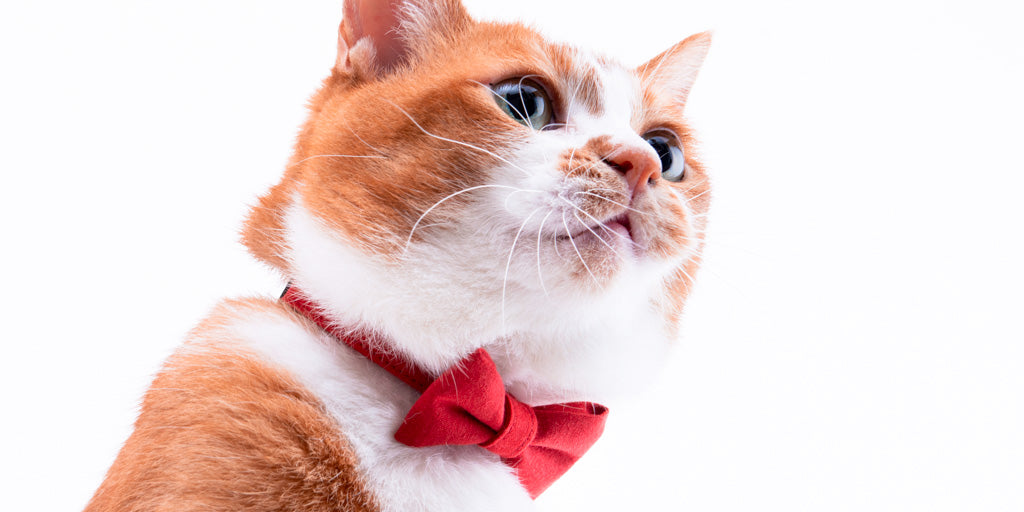
![Why Does My Cat Need a Collar? [Disadvantages and Their Solutions]](http://www.poponeko.jp/cdn/shop/articles/DSC_9121-2_f7898a9b-8f8c-4864-921f-55ea7577a6b8.jpg?height=400&v=1764335616)

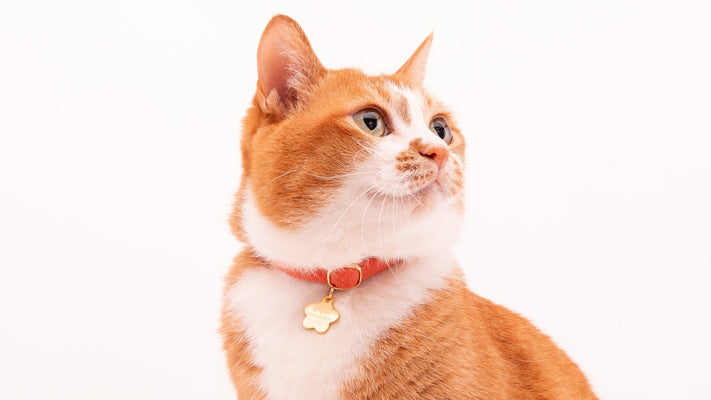
![[Set] Leaf Ribbon Moda Fab-Boo-Lous & Cat Collar Cotton Oxford Orchid](http://www.poponeko.jp/cdn/shop/files/260618_00166.jpg?v=1784451812&width=600 "[Set] Leaf Ribbon Moda Fab-Boo-Lous & Cat Collar Cotton Oxford Orchid")
![[Set] Leaf Ribbon & Scrunchie Cat Collar - Hannari Cherry Blossom Blue](http://www.poponeko.jp/cdn/shop/files/2608_00139.jpg?v=1789197917&width=600 "[Set] Leaf Ribbon & Scrunchie Cat Collar - Hannari Cherry Blossom Blue")
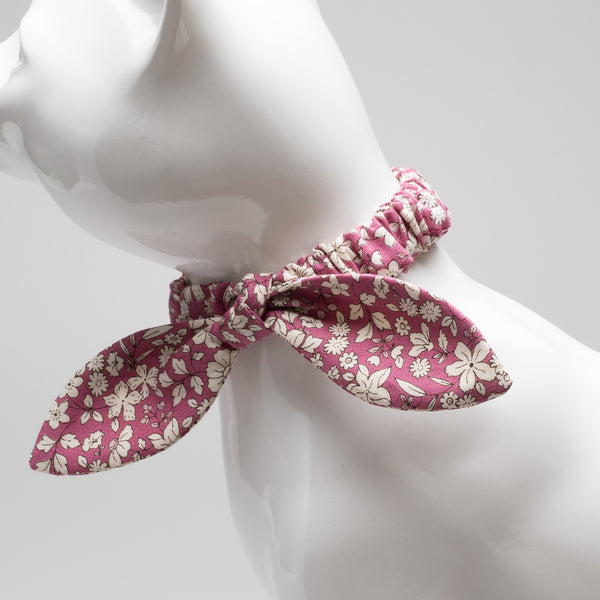
![[Set] Leaf Ribbon moda Lydia Lace & Cat Collar Ayakasuri Akane](http://www.poponeko.jp/cdn/shop/files/260618_00159.jpg?v=1784451813&width=600 "[Set] Leaf Ribbon moda Lydia Lace & Cat Collar Ayakasuri Akane")
![[Set] Leaf Ribbon & Scrunchie Cat Collar, Elegant Sakura Pink](http://www.poponeko.jp/cdn/shop/files/2608_00138.jpg?v=1789197917&width=600 "[Set] Leaf Ribbon & Scrunchie Cat Collar, Elegant Sakura Pink")
![[Slightly Imperfect] Cat-Friendly Skin Protection Suit (Coverall) for Cats](http://www.poponeko.jp/cdn/shop/files/DSC05845.jpg?v=1769403729&width=600 "[Slightly Imperfect] Cat-Friendly Skin Protection Suit (Coverall) for Cats")
Leave a comment