
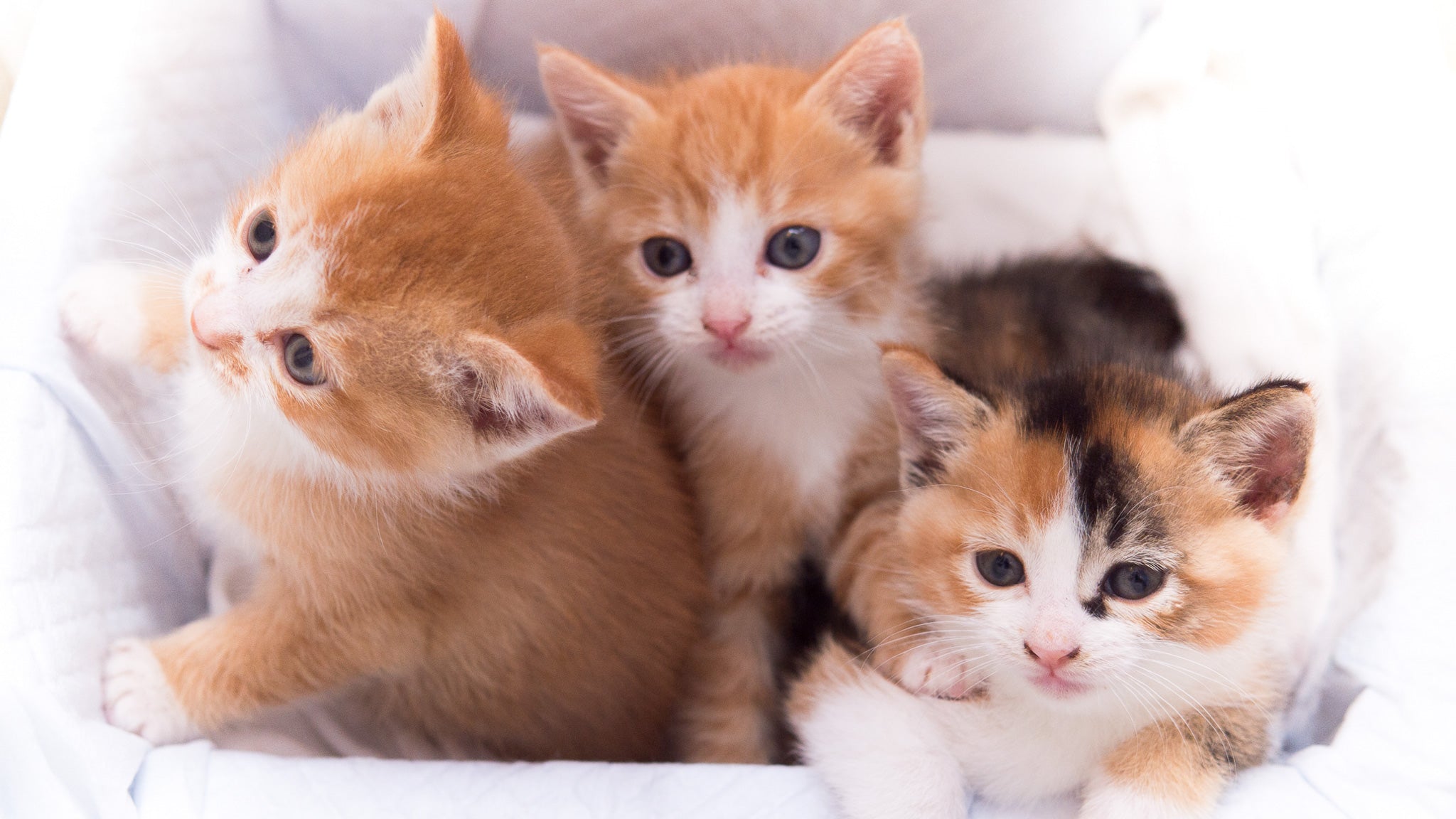
Those who have just started keeping a cat might be thinking of putting a collar on their cat. While collars offer some benefits, they also have drawbacks. This article explains cat collars in detail.
Do Kittens Need Collars? | The Purpose of Putting a Collar on a Cat

The Role of Collars (Identification and Lost Pet Prevention)
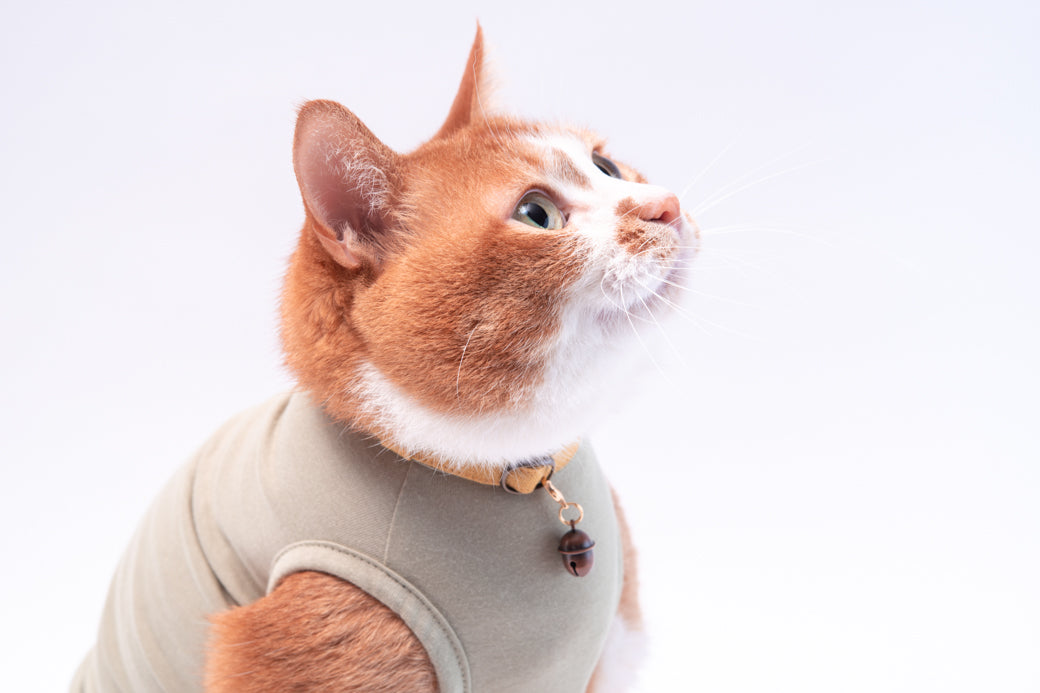
While many cats may be kept strictly indoors, they might accidentally get outside. For cats kept strictly indoors, getting outside can cause panic, and they may not be able to find their way back on their own. In such cases, if contact information is written on the collar, the person who finds them may contact you.
It is not highly recommended to use collars purely as a fashion accessory, so it is best to consider them as a lost pet prevention item.
|
[Related Products] |
Is it necessary even for indoor-only cats?
For cats kept strictly indoors, they have never been outside, so they have no idea about the outside world. If they somehow get outside and wander a little far from home, they may lose their sense of direction. As a result, they may go farther and farther away. Furthermore, if they come into contact with cars or other cats or dogs, they might panic due to the unfamiliar experience and act unpredictably. In such cases, they won't be able to return on their own. If they are wearing a collar, the person who finds them will immediately know that it is a pet cat, and there is a possibility that they can be returned to their owner.
It may also be useful if they get separated during natural disasters.
Differences and Complementary Relationship Between Collars and Microchips
A microchip is embedded in the body with a unique identification number, and by registering the owner's information, the owner can be identified.
With the revision of the Animal Welfare Act in 2022, microchip implantation is mandatory for cats sold in pet shops. For rescued or adopted cats, it is a voluntary effort, meaning "efforts should be made to implant one." As owner awareness increases, more people are implanting microchips in rescued cats.
However, a microchip's number cannot be read without a dedicated scanner, and owner information can only be accessed through a registration agency, so immediate identification of the owner is not possible.
On the other hand, if a cat is wearing a collar, contact information is immediately visible, increasing the chances of the cat being returned quickly if found. However, if a cat is running around after escaping, there is a risk of strangulation or the collar falling off, in which case the cat may not be able to return to its owner. Since microchips do not fall off, it might be a good idea for cats prone to escaping to have both.
When should a kitten start wearing a collar? | Age and how to get them used to it

From what age can they wear it?
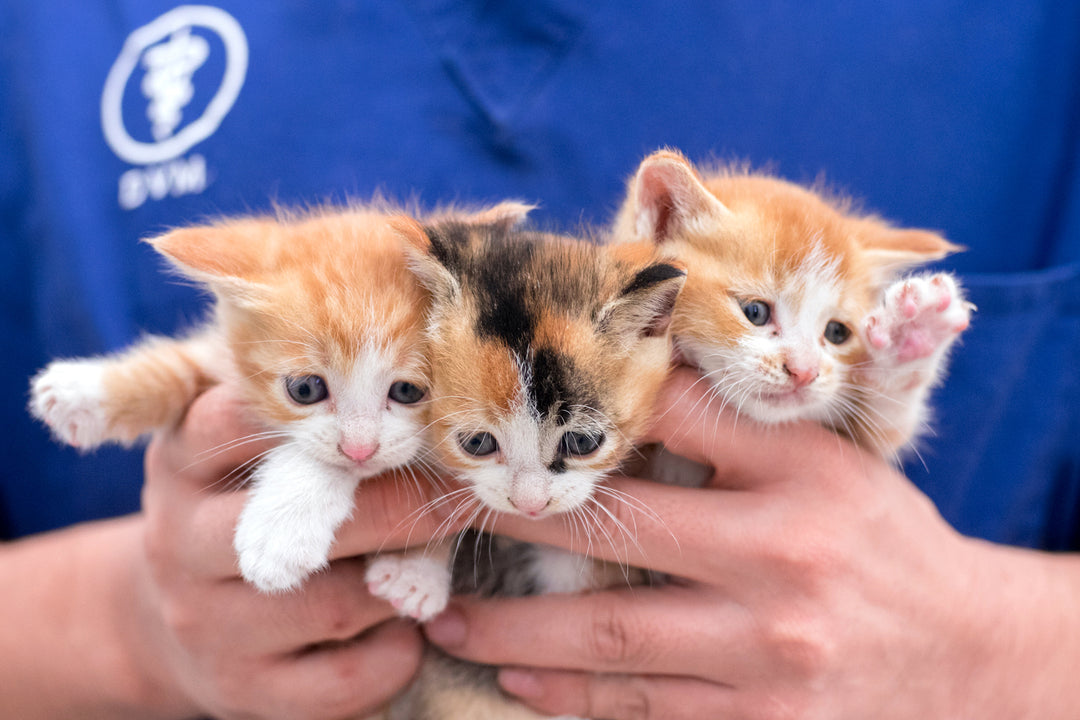
Kittens can wear collars from around 2 or 3 months old, when they become more active. Also, collars come in different sizes, so putting on an overly large collar can lead to unexpected accidents. You should consider the timing of collar use based on the collar's size.
The importance of a gradual introduction, not sudden use
Cats don't know what a collar is. Therefore, they may strongly dislike wearing one. Instead of forcing it on them from the start, gradually introducing it step by step will make them more accepting. Forcing it on them can cause too much stress or instill a fear of collars.
First, it's necessary to create a positive association with the collar. Place the collar in front of them and give them treats. Once they can eat treats with the collar nearby, give them treats while briefly putting on and immediately removing the collar several times. If they don't show any signs of discomfort, gradually increase the wearing time. If they don't mind wearing it for half a day, then leave it on all day. If they still don't show any discomfort, the training is complete.
Tips and precautions when your cat doesn't get used to a collar
If your cat isn't getting used to the collar, try repeating the wearing training mentioned earlier from the beginning. If the cat doesn't have a good impression of the collar, it will be harder for them to accept it, so you might want to spend more time giving treats near the collar. Also, if the owner isn't accustomed to handling the collar, it might take longer to put it on, which can make the cat agitated. It's necessary to get used to handling the collar before putting it on the cat.
If your cat strongly dislikes it or panics when wearing it, it's best to give up on using a collar. Forcing it on them can lead to unexpected accidents. In such cases, use other identification methods like a microchip.
|
[Related Articles] |
How to Choose a Kitten Collar | Check Material, Size, and Safety Features

Light and soft materials are safest (such as cotton or linen)
Kittens have thin necks, so heavy materials can put a strain on their necks. Also, depending on the material, it can damage the skin, causing hair loss or dermatitis. Therefore, choose materials that are light and soft.
Choose one that can be adjusted in size as they grow
Kittens grow rapidly. Therefore, if the collar is not adjusted regularly, it will constrict their neck. Most products allow size adjustment, but some people use hair scrunchies as collars. Scrunchies not only cannot be adjusted in size but can also get caught and put a strain on the neck. Always use a collar that can be adjusted in size. The guideline for collar size is one that allows two fingers to fit underneath.
|
[Related Articles] |
Safety buckle for accident prevention in emergencies
Cat collars typically feature a safety buckle designed to release if the collar gets caught on something. Kittens often act impulsively and aren't highly aware of danger. Therefore, there's a risk of the collar getting caught and causing strangulation. If they escape, they might panic and run around, getting snagged on tree branches or other objects. To prevent such accidents, these buckles are designed to release under a certain amount of force. Choose products with this feature. Scrunchies or belt-style collars are not recommended.
What is "Collar Baldness"? | How to Choose a Kitten Collar That's Gentle on Their Skin


Causes of collar baldness (friction, material, ill-fitting size)
When wearing a collar, the fur in that area can fall out, revealing the bare skin. This is called collar baldness. Collar baldness is caused by friction from the collar or dermatitis from the material. Friction from the collar can occur if the collar is made of a hard or heavy material, or if it's too tight and rubs, leading to hair loss. Dermatitis from the material, also known as contact dermatitis, occurs when the skin reacts to the material, causing inflammation and hair loss.
Key points to review to prevent baldness
Collar baldness is caused by friction or inflammation from the collar, so review whether the collar's weight, material, and hardness are appropriate. Choose a soft, lightweight material and adjust the collar so it's not too tight.
What to do if there's a problem and when to see a vet
If hair loss is due to friction, there won't be severe skin inflammation. In cases of contact dermatitis, where the skin is overly sensitive to the material, symptoms like redness, itching, and eczema may appear in addition to hair loss. In such situations, continuing to wear the collar will worsen the condition, so remove the collar immediately and take your cat to the vet. After treatment, it's necessary to choose a collar made of a different material or consider not using a collar at all.
|
[Related Articles] |
Combining Microchips for More Secure Lost Pet Prevention

The Reality of Low Discovery Rates with Microchips Alone
A microchip involves embedding a chip with an individual identification number into the body. Therefore, it's impossible to tell if a cat is a pet just by looking at it. This means there's a chance it might be overlooked as a stray. To determine if a microchip is present, a dedicated scanner is required, which is only available at limited facilities such as veterinary clinics, police stations, and animal welfare centers. Thus, the general public cannot ascertain if a microchip is present. In contrast, if a cat wears a collar, anyone can immediately tell it's a pet, increasing the likelihood that the person who finds it will try to locate the owner.
Collar + Lost Pet Tag + Microchip for Triple Protection
Collars, lost pet tags, and microchips alone might not be effective enough in an emergency. Collars and lost pet tags can fall off, or the writing can become illegible over time. As mentioned earlier, microchips have disadvantages such as not being able to identify a cat as a pet from sight and limited institutions being able to read microchip numbers or retrieve personal information. To cover all these aspects, it is best to implement a triple protection strategy using a collar, a lost pet tag, and a microchip.
|
[Related Articles] |
Safety Management Style Recommended by a Veterinarian
To prevent your cat from getting lost, keeping them strictly indoors is absolutely essential. Measures to prevent escape are the first priority. However, there is always a small possibility of sudden escape or separation due to disasters. To prepare for such an eventuality, we recommend fitting your cat with a collar, identification tag, and microchip.
|
[Related Articles] |
Summary | A Gentle Collar Debut for Your Kitten

It's important to choose a safe collar suitable for your kitten's age.
Kittens have thin necks and often act impulsively, which can lead to discomfort or unexpected accidents. It's essential to choose a collar appropriate for your kitten's age and to size up as they grow.
Combine collars and microchips for a worry-free daily life.
Both collars and microchips have their own advantages and disadvantages. Ideally, it's best to use both a collar and a microchip.
Choose a collar from a "cat's perspective," not just for its appearance.
While some owners prioritize fashion for collars, cats are not decorations. Carefully consider the purpose of the collar and strive to choose one that causes the least burden to your cat.
|
[Related Articles] |


![[Veterinarian's Guide] Cat Escape Prevention Measures: Creating a Safe and Comfortable Environment](http://www.poponeko.jp/cdn/shop/articles/shutterstock_2035199633.jpg?height=400&v=1725783884)
![[Veterinarian's Guide] Preparing Your Cat for a Safe Time Alone at Home](http://www.poponeko.jp/cdn/shop/articles/shutterstock_1398782681.jpg?height=400&v=1726749748)


![[Set] Leaf Ribbon & Cat Collar - Champ de Fleurs, Raspberry](http://www.poponeko.jp/cdn/shop/files/DSC00099_6b51f9b4-93c7-4c58-b439-108715aa361f.jpg?v=1780663183&width=600 "[Set] Leaf Ribbon & Cat Collar - Champ de Fleurs, Raspberry")
![[Set] Leaf Ribbon & Cat Collar - Arabesque Swirl, Teal](http://www.poponeko.jp/cdn/shop/files/2608_00118.jpg?v=1789044775&width=600 "[Set] Leaf Ribbon & Cat Collar - Arabesque Swirl, Teal")
![[Set] Leaf Ribbon Fleurage Blue & Cat Collar Belgian Linen Mustard](http://www.poponeko.jp/cdn/shop/files/2608_00121.jpg?v=1789197487&width=600 "[Set] Leaf Ribbon Fleurage Blue & Cat Collar Belgian Linen Mustard")
![[Set Item] Leaf Ribbon & Cat Collar, Petit Fleur, Mint](http://www.poponeko.jp/cdn/shop/files/2608_00406.jpg?v=1789946167&width=600 "[Set Item] Leaf Ribbon & Cat Collar, Petit Fleur, Mint")
![[Set] Leaf Ribbon & Scrunchie Cat Collar Champ de Fleurs Pink](http://www.poponeko.jp/cdn/shop/files/DSC00086_92430f49-b816-4514-8687-7fd9a6e57988.jpg?v=1780663183&width=600 "[Set] Leaf Ribbon & Scrunchie Cat Collar Champ de Fleurs Pink")
![[Set] Leaf Ribbon moda Lydia Lace & Cat Collar Ayakasuri Akane](http://www.poponeko.jp/cdn/shop/files/260618_00159.jpg?v=1784451813&width=600 "[Set] Leaf Ribbon moda Lydia Lace & Cat Collar Ayakasuri Akane")

Leave a comment